

A filter backwash air blower performs a short but demanding duty. During air scour, the unit must deliver the specified airflow against water head and underdrain resistance, start reliably at the required frequency and coordinate with valves that protect both the filter and the positive-displacement blower.
This application is different from process aeration. Air scour cleans granular media by agitating the bed and detaching retained solids. The filter designer sets the air rate, duration and sequence; the blower supplier selects equipment for that defined operating envelope.
Clarification and Filtration Have Different Jobs
Coagulation destabilizes fine particles, rapid mixing distributes the chemical and flocculation builds larger aggregates. Clarification then provides conditions for solids separation. Mechanical, hydraulic or inline mixing is common; pneumatic mixing should not be assumed unless the process was designed for it.
Granular filters capture the particles that remain. As material accumulates, head loss rises and filtrate quality may deteriorate. A controlled wash sequence restores the bed without losing media or damaging the underdrain. This cleaning step is where a Roots-type filter backwash air blower has a direct role.
How Air Scour Cleans Granular Media
Air is distributed beneath the filter bed through an underdrain or dedicated nozzles. The rising air agitates the media and helps detach solids before or during the water-wash phase. The design may use air alone, simultaneous air and water, or a staged sequence. The correct method depends on media type, bed depth, underdrain limits and the filter supplier’s validated procedure.
Too little air can leave mud balls and retained deposits. Too much air can displace media, disturb support layers or exceed the underdrain limit. A filter backwash air blower should therefore match the specified rate rather than an arbitrary maximum capacity.
Filter Backwash Air Blower Pressure Calculation
The total differential pressure is the sum of the water head above the air outlet, the underdrain or nozzle resistance and losses through the pipework, valves and fittings. Each component must be evaluated at the design airflow. The calculation can be stated as:
Total differential pressure = hydrostatic head + air-distribution loss + pipe and valve loss + justified design allowance.
The maximum credible water level governs hydrostatic head. Underdrain loss should come from the filter supplier. A blanket percentage margin should not conceal missing data, and the selected point must remain within the blower’s pressure, power, speed and discharge-temperature limits.
Valve Sequencing Protects the Blower and Filter
A positive-displacement blower must not run against a closed discharge path. The control sequence should open the correct air route, confirm permissive conditions and then start or load the filter backwash air blower. Shutdown should also avoid a sudden trapped-pressure event. Non-return protection and a correctly set pressure-relief device provide additional safeguards but do not replace sound sequencing.
The filter process has its own interlocks. Water level, drain position and wash-water status should be verified so air is not introduced into an unintended operating state. Responsibilities between the blower-panel supplier and plant control integrator should be written into the scope.
Intermittent Operation, Starts and Shared Capacity
Air scour is normally intermittent. The duty cycle should state run time, rest time, maximum starts per hour and the longest expected wash sequence. Motor acceleration, unloaded or bypass arrangements and package cooling must be checked for the real cycle, not assumed from continuous-duty performance alone.
If one filter backwash air blower serves several filters, the control philosophy must define whether wash cycles can overlap. Capacity should cover the maximum permitted simultaneous demand. Installing enough air for every filter at once is unnecessary when the automation prevents concurrent washes; selecting for one filter is unsafe when overlap is possible.
Air Quality, Piping and Package Scope
Inlet air should be taken from a clean location and filtered for the full design flow. The discharge header should drain condensate where needed and avoid low points that collect water. Flexible connectors and supports must accommodate thermal movement without transferring pipe strain to the blower.
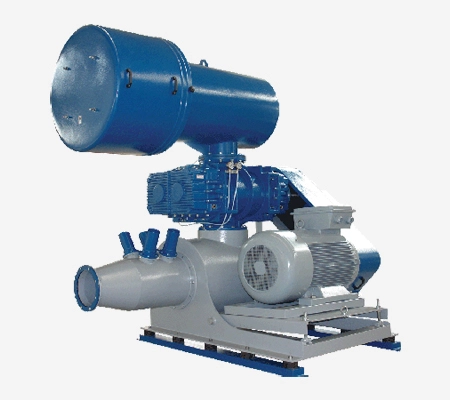
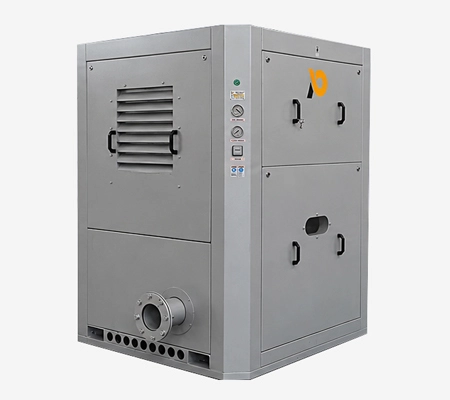
A complete filter backwash air blower unit includes Specify a filter backwash air blower from water level, underdrain loss, airflow, cycle frequency and valve sequence for dependable media cleaning. The quotation should identify exactly what is included and which valves or controls remain in the filter supplier’s scope.
Bare-Shaft
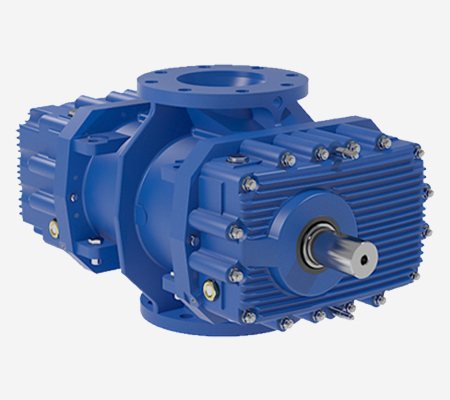
Blower Package
Blower Unit
Data Required for Pasifik Blower Selection
Pasifik Blower can assess a two-lobe or three-lobe machine for a compatible air-scour duty when the following design information is available.
- Airflow per filter and maximum number of simultaneous washes
- Maximum and minimum water level during the air stage
- Underdrain or nozzle pressure loss at design airflow
- Piping, valve and fitting loss
- Wash duration, rest time and maximum starts per hour
- Inlet temperature, pressure, elevation and ambient range
- Motor supply, control interface, noise limit and redundancy
- Required package components and site responsibility split
Glossary
Air scour: Forcing controlled air up through a filter underdrain to violently agitate granular media and loosen trapped solids.
Backwash: A vital maintenance cycle that alters or reverses flow through a filter bed to flush out accumulated debris.
Clarifier: A massive basin or tank engineered to separate suspended particulates from water utilizing flotation or gravity settling.
Colloid: Exceptionally fine particles that naturally resist gravity settling and remain stubbornly dispersed.
Filter head loss: The drop in hydraulic pressure or head caused by physical resistance as water pushes through a dirty filter.
Floc: Clusters of destabilized particles that clump together during flocculation and coagulation.
Granular media: Carefully sized materials, such as anthracite or specialized sand, used to create a filtration bed.
Rapid mix: A high-intensity, very short mixing phase utilized to quickly disperse treatment chemicals into the water.
Underdrain: The structural floor system of a filter that distributes backwash air/water upwards and collects clean filtered water downwards.