

Reliable aeration begins with a clear understanding of the biological process, the air-distribution system and the actual operating conditions. Pasifik Roots blowers for wastewater treatment are designed for continuous-duty applications that require predictable airflow against changing system resistance. Manufactured in Konya, Türkiye, our two-lobe and three-lobe positive-displacement blowers can be supplied as bare-shaft machines, baseplate-mounted units or complete blower packages configured for the project.
For detailed technical articles, click here.
In a wastewater treatment plant, a blower is not selected from basin volume or motor power alone. Required oxygen transfer, mixing duty, diffuser characteristics, liquid depth, pipe losses, site altitude, inlet temperature, control range and redundancy philosophy must be evaluated together. Pasifik Blower uses these inputs to establish the duty point and define a practical package for municipal and industrial wastewater projects.
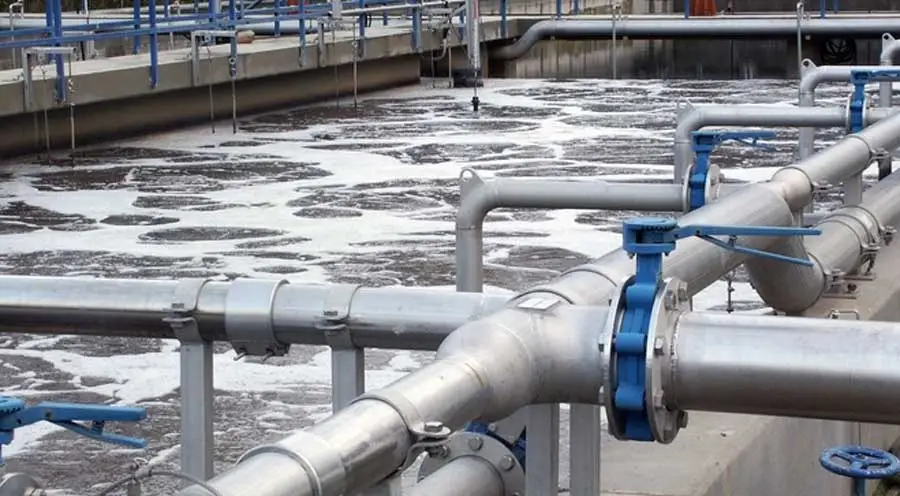
What Is Wastewater?
Wastewater is water whose physical, chemical or biological quality has been altered by human activity. It may originate from homes, commercial buildings, institutions, manufacturing plants, food-processing facilities, mines, agricultural operations or other processes. Depending on the sewer system, municipal wastewater may also include groundwater infiltration, stormwater inflow and other non-domestic contributions.
Wastewater is therefore not one uniform fluid. Its flow and composition can change by hour, season, production campaign and weather condition. Domestic wastewater usually contains biodegradable organic matter, suspended solids, nutrients and microorganisms. Industrial wastewater may additionally contain oils, salts, solvents, metals, extreme pH, high temperatures or compounds that inhibit biological treatment. These differences determine the required treatment train and the air demand placed on the aeration system.
What Is Wastewater Treatment?
Wastewater treatment is the controlled removal or conversion of contaminants so that the treated water can be discharged, reused or sent to a subsequent process in accordance with the applicable requirements. Treatment objectives may include reducing suspended solids, biodegradable organics, nitrogen, phosphorus, pathogens, oils, metals, salts and specific industrial pollutants.
No single process train is correct for every facility. Municipal and industrial plants combine physical, chemical and biological unit operations according to influent characteristics, effluent limits, site constraints and lifecycle priorities. The conventional sequence is often described as preliminary, primary, secondary and tertiary or advanced treatment, followed where required by disinfection. A parallel solids-treatment line manages screenings, grit, primary sludge and waste biological solids.
How Roots Blowers for Wastewater Treatment Work
A Roots blower is a rotary positive-displacement machine. Two synchronized, lobed rotors turn in opposite directions inside a casing without contacting each other or the casing. During each revolution, defined pockets of gas are trapped at the inlet and carried around the outside of the rotors to the discharge side.
The blower primarily moves volume; it does not independently choose the operating pressure. Pressure develops because the connected aeration system resists the delivered airflow. At a given speed, theoretical displacement is nearly fixed, while actual inlet flow is reduced by internal leakage or slip. As differential pressure increases, slip, absorbed power and discharge temperature generally increase as well.
This operating principle makes Roots blowers for wastewater treatment well suited to applications that require stable air delivery across a defined pressure range. It also means that the discharge must never be closed while the blower is operating. Proper non-return, isolation and pressure-relief arrangements are essential.
Because timing gears maintain rotor synchronization, the rotors do not require lubricating oil inside the compression chamber. The process-air path can therefore be oil-free under normal operating and maintenance conditions. Bearings and timing gears still require the specified lubricant outside the gas path; “oil-free compression” does not mean that the complete machine is oil-less.
Selecting Roots Blowers for Wastewater Treatment
A technically sound selection balances biological performance, mechanical limits, controllability and lifecycle cost. The following factors should be reviewed together.
Minimum, Design and Maximum Air Demand
Average demand alone is not sufficient. The blower arrangement must serve nighttime minimums, normal loading, diurnal peaks, seasonal temperature changes, wet-weather conditions, industrial batch loads and future expansion where applicable. The minimum stable blower speed and minimum diffuser airflow can limit practical turndown.
Differential Pressure at Every Duty Point
Airflow and pressure losses interact. A design should include the clean and expected fouled conditions, minimum and maximum water levels, normal valve positions and the most restrictive active air path. Artificially high pressure margins can oversize the motor and waste energy; insufficient allowance can leave the plant without adequate air as diffusers age.
Absorbed Power and Motor Rating
The relevant performance value is absorbed shaft power at the confirmed duty point. The electric motor nameplate rating must additionally account for drive efficiency, service factor, starting method, ambient temperature, altitude, supply conditions and the complete operating envelope. A motor should not be chosen from nominal flow alone.
Discharge Temperature
Higher pressure ratio and higher inlet temperature raise discharge temperature. Thermal limits affect blower speed, materials, lubricant, enclosure ventilation and permissible continuous operation. Hot summer inlet conditions and a partially blocked inlet filter should be assessed rather than relying only on a standard 20°C catalogue condition.
Duty Cycle and Redundancy
Continuous biological treatment normally requires a defined standby philosophy. Depending on process criticality, plants may use duty/standby, duty/assist/standby or N+1 arrangements. The design should state whether one blower can satisfy average demand, peak demand or only emergency process requirements when another unit is unavailable.
Noise and Installation Environment
Intake and discharge pulsation, mechanical radiation, piping and ventilation openings all contribute to the installed sound level. Inlet and discharge silencers, flexible connectors, pipe supports and an acoustic enclosure can be incorporated where required. The project must state the sound-pressure limit, measurement distance, operating condition and whether the requirement applies to one unit or the complete blower room.
Frequently Asked Questions
Why are Roots blowers used in wastewater treatment?
Roots blowers provide predictable positive-displacement airflow at the differential pressures commonly required to overcome liquid depth, diffuser resistance and pipe losses. They are used for biological aeration, aerobic digestion, aerated grit chambers, equalization, membrane scouring and filter air scour when the confirmed duty lies within the blower’s operating envelope.
How do I size a Roots blower for wastewater aeration?
Begin with the process oxygen and mixing requirements, convert them into airflow using the selected diffuser’s field-corrected performance, and then calculate total system pressure. Correct the air capacity for inlet temperature, absolute pressure, altitude and humidity. Finally, check speed, absorbed power, discharge temperature, turndown and motor rating at every required operating case.
Is blower pressure determined by basin depth?
Basin depth is a major component, but it is not the complete pressure requirement. Diffuser dynamic wet pressure, headers, pipes, fittings, valves, silencers, fouling allowance, tank gas-space pressure and inlet restriction must also be considered.
What is the difference between Nm³/h and actual m³/h?
Nm³/h expresses volume at stated normal reference conditions. Actual m³/h expresses volume at the blower inlet conditions. Because gas density changes with absolute pressure, temperature and humidity, the two values must not be treated as equal without conversion. Every quotation should state the reference basis.
Can a VFD control Roots blowers for wastewater treatment?
Yes. VFD control is commonly used to match airflow to variable demand, provided the blower, motor and drive remain within their approved speed, pressure, power and temperature limits. Minimum diffuser flux, motor cooling and the interaction with branch control valves must also be checked.
Should I choose a two-lobe or three-lobe blower?
Both can be suitable. Three-lobe geometry can reduce discharge pulsation under appropriate conditions, while two-lobe machines provide proven and robust performance. Compare verified capacity, absorbed power, temperature, permissible speed, sound treatment, maintenance and package design at the actual duty point.
Are wastewater treatment Roots blowers oil-free?
The compression chamber can be oil-free because the rotors operate without contact and the timing gears and bearings are lubricated outside the process-air path. The complete machine still contains lubricant and requires scheduled maintenance. Application-specific air-purity and sealing requirements should be stated during selection.
How many blowers does a wastewater treatment plant need?
The number depends on minimum and peak air demand, turndown, process criticality, maintenance strategy and required redundancy. Duty/standby, duty/assist/standby and N+1 arrangements are common concepts, but the correct configuration must be established from a plant-specific reliability assessment.
Can the pressure-relief valve be used to control airflow?
No. A relief valve protects the blower and system from excessive pressure; it is not intended for normal capacity control. Routine relief-valve discharge wastes energy, creates heat and noise, and indicates that the control strategy or system condition should be investigated.
What information should be included in a blower quotation?
A technically comparable quotation should state inlet flow and reference conditions, inlet and discharge pressures, differential pressure, speed, absorbed power, motor rating, predicted discharge temperature, performance tolerance or basis, package components, materials, sound basis, operating limits and exclusions.
Request a Technical Selection
Correctly selected Roots blowers for wastewater treatment help an aeration system deliver the required air without unnecessary pressure, power or complexity. Send Pasifik Blower your process duty, airflow basis, basin and diffuser data, pressure losses, site conditions, control range and supply requirements. Our team will evaluate the operating points and propose an appropriate blower and package configuration for your project.
For detailed articles about Wastewater Treatment and Roots Blowers Applications, click here.