

Roots blowers for mining and cement industry can serve selected conveying, aeration and process-air duties when the material, flow and pressure fit the machine’s verified operating range. Mining and cement plants handle abrasive powders, slurries, gases and granular products across processes with very different air requirements. A blower selected for one duty should not be assumed suitable for another.
For detailed technical articles, click here.
A rotary-lobe blower displaces a near-fixed volume per revolution. Actual delivered flow changes with speed, inlet conditions, internal slip and differential pressure; the connected system establishes the pressure the blower must overcome. Selection therefore starts with the process duty and a complete route or system calculation.
Where Roots Blowers May Fit
Flotation-cell air: Forced-air flotation cells receive air through a manifold, sparger or injection system. Before sizing a blower, confirm whether the cells are forced-air or self-aspirating; the latter may draw in air through their own impeller arrangement. The required flotation-cell air rate depends on the cell design and operating conditions, not on the blower alone.
The pressure calculation should include liquid depth above the air outlets, sparger resistance, branch piping, valves and the header. The blower supplies air; it does not set bubble size or guarantee mineral recovery. Slurry properties, cell geometry, impeller speed and operating practice also affect flotation performance.
Heap-leach and bioleach aeration: Air may be distributed beneath or within a heap to supply oxygen for the intended process. This is separate from irrigation, which distributes the leach solution. Airflow and pressure depend on the distribution grid, ore depth and heap permeability, which can change as ore settles, fines migrate or irrigation wets and compacts the material.
The leach aeration grid needs a flow distribution review, because uneven resistance can send more air through some zones than others. A blower should be specified from the process air requirement and the pressure losses through the grid and heap—not from heap volume alone. Air supply does not guarantee oxygen transfer or leaching performance; those depend on the full process.
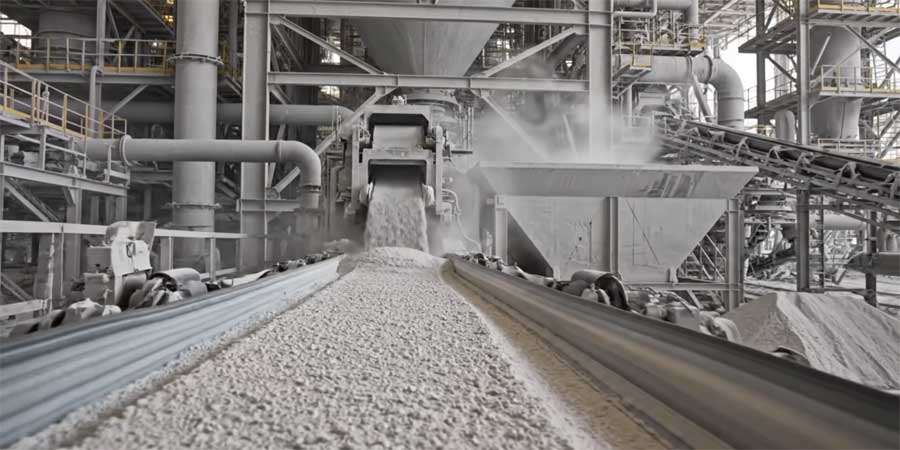
Pneumatic conveying: Positive-pressure systems can transfer suitable dry powders and granules such as lime, limestone, cement, fly ash, mineral additives and some concentrates. The blower supplies conveying gas upstream of the feeder. Material enters the line at the solids feed interface, where feeder metering, pressure sealing and leakage influence effective conveying flow.
The conveying regime, material rate, pipe bore, route, bends, elevation and receiver-filter resistance all affect the duty. Coarse or dense-phase systems may require more pressure than the selected blower can provide. High velocity can increase erosion and particle breakage; insufficient velocity can lead to deposits or blockage. The solids acceleration zone after feeding and downstream of bends should be considered in the conveying calculation.
Airslides and silo discharge:. Low-pressure air through an airslide cloth can reduce friction and help a suitable powder move down an inclined channel. Silo aeration may also improve discharge near the silo discharge cone. These applications often use localized aeration rather than fluidizing the entire silo inventory.
The required pressure and flow depend on the distributor, material depth, powder properties, ductwork and vent filter. Some duties need very low pressure and high flow, where a fan may be more suitable. A roots blower should be selected only when its model-specific operating range covers the actual requirement.
Dust handling and vacuum cleaning: A blower may supply air for positive-pressure transfer of collected dust, subject to appropriate feeder, receiver and filtration design. Central vacuum cleaning is a separate machine duty: it requires a vacuum-rated package and solids separation upstream of the vacuum source. A standard positive-pressure blower should not be assumed suitable for vacuum operation.
Main ventilation and kiln duties: Mine ventilation networks, cement-kiln draft and clinker-cooler air commonly require purpose-selected fans. Roots blowers may be relevant to separate low-pressure transfer, aeration or gas duties, but the plant location alone does not establish suitability. A clinker cooler is a major process-air duty; its flow and pressure requirements should be checked against fan technology and the complete cooler design.
Mine methane drainage is also a distinct gas-handling application. It requires a purpose-designed package with gas compatibility, containment, monitoring and protection defined by the mine’s safety basis. It should not be treated as ordinary conveying air.
Match Flow and Pressure to the Installation
Every flow figure needs a reference basis. State whether it is actual flow at the blower inlet or a standardized volume, and provide the pressure and temperature used for the reference condition. Convert standardized flow to actual inlet conditions before comparing it with blower performance data. Site altitude and inlet temperature can affect the required capacity.
If several branches can operate together, determine pickup-point simultaneity from the actual control sequence. For branches expressed on the same inlet-condition basis, a preliminary total-flow balance is:
Total Inlet Volumetric Flow
Do not add values stated at different pressures or temperatures without conversion. The number of installed pickup points does not necessarily equal the number that operate at once.
Calculate pressure across the blower flanges:
Blower Pressure Difference
The flange pressures should include losses through the relevant piping, valves, feeders, separators, filters and process equipment. For flotation, include liquid head and sparger losses. For heap aeration, include the distribution system and heap resistance. For conveying, include the feeder, material transport, bends, elevation and receiving system.
A bend wear allowance should be based on material abrasiveness, particle velocity, bend design and inspection history. It is not a substitute for calculating pressure loss. Likewise, filter resistance should include the specified loaded condition: filter-cake loading can change system pressure and reduce the remaining operating margin.
The required blower operating point includes flow and pressure together. As resistance increases, internal slip and discharge temperature may increase while actual flow changes. Check the minimum, normal and maximum cases against the selected model’s performance curve, speed, motor power and temperature limits. A larger motor does not extend the blower’s permitted pressure range.
Material, Dust and Package Considerations
Mining and cement materials can be abrasive, cohesive, hygroscopic or contaminated with moisture. Particle-size distribution, bulk density, temperature and moisture range affect feeder behavior, conveying stability, wear protection and receiver filtration. If the material varies by source or season, include those conditions in the design basis.
The blower should be protected from material carryover. In a positive-pressure conveying system, solids enter downstream of the blower; the receiver and filter separate material from conveying gas. In a vacuum system, separator and filter performance protect the vacuum equipment. Specify the dust receiver by its gas flow, solids loading, filter resistance and cleaning arrangement.
A dust-hazard assessment may be needed where the material can form a combustible cloud. Containment, ignition control, grounding, venting, isolation or other safeguards depend on the actual material and installation. A blower package alone does not make a dust-handling system safe.
Outdoor conditions, dust exposure, maintenance access and the location of filters and silencers influence package layout. Review inlet filtration, guards, flexible connections, supports, drainage and access for inspection. Where gas or dust hazards apply, electrical and control equipment must meet the site’s specified requirements.
Prepare the Technical and Commercial Review
A supplier can assess the duty more accurately when the enquiry includes:
- Material or gas properties, including particle-size distribution, moisture, temperature and contaminants.
- Required airflow with reference conditions, operating range and expected simultaneous branches.
- Suction and discharge pressures, route drawing and pressure-loss breakdown.
- Feeder type and leakage estimate for conveying applications.
- Receiver, filter and cleaning-system data, including loaded resistance.
- Flotation-cell or heap-aeration layout and distributor requirements.
- Start-up, shutdown, turndown, operating hours and control sequence.
- Site altitude, ambient conditions, utilities, maintenance access and standby needs.
- Hazardous-area or dust-safety requirements, where applicable.
For variable demand, specify the required flow turndown and explain how branches are sequenced. Variable-speed control or multiple machines may suit some duty profiles, subject to each model’s permitted speed and cooling limits. A solids recirculation ratio, where used in a circulating process, should be provided as part of the process design; it does not replace the gas-flow and pressure calculation.
Roots blowers can support defined duties in mines, mineral-processing plants and cement works. Final selection should compare a model-specific performance curve with the process requirement, while also accounting for feeder, piping, receiver, filtration, safety and maintenance costs. When flow is very high at very low pressure, or the duty exceeds the blower’s verified envelope, another machine class may provide a better fit.
Glossary
Airslide cloth: Porous fabric that allows low-pressure air to pass through and mobilize suitable bulk material. Its permeability and condition affect flow distribution and pressure requirement.
Bend wear allowance: Design consideration for material loss at bends exposed to abrasive particles. It should reflect material properties, velocity, bend geometry and inspection practice.
Clinker cooler: Equipment that cools hot clinker using process air. Its main air duty is generally evaluated with purpose-selected fan technology.
Dust receiver: Vessel or separator that collects solids from a gas stream before the gas reaches downstream equipment. Its capacity, filter and cleaning system should suit the expected dust load.
Filter-cake loading: Accumulated dust layer on filter media that increases resistance to gas flow. The loaded condition should be included in the system pressure calculation.
Flotation-cell air rate: Gas volume supplied to a flotation cell over a stated time and reference condition. Its required value depends on cell design and operating conditions.
Flow turndown: Ratio between the highest and lowest required operating flow. It helps determine whether speed control, staged machines or another configuration suits variable demand.
Heap permeability: The ability of gas to pass through the placed ore. Moisture, settlement and fines can change it across the heap and over time.
Leach aeration grid: Piping and outlets that distribute process air beneath or through a leach heap. Its layout and resistance affect how evenly the air reaches different zones.
Mine methane drainage: Collection and movement of methane-bearing gas from a mine or surrounding strata. It requires a gas-specific package and safety review.
Pickup-point simultaneity: The number and combination of vacuum or conveying pickup points expected to operate at the same time. It is used when determining the system’s combined airflow demand.
Silo discharge cone: Sloped lower section of a silo that directs bulk material toward an outlet. Its geometry and aeration arrangement influence whether material reaches the feeder consistently.
Solids acceleration zone: Pipeline section where newly fed particles gain speed from the conveying gas. Its length and conditions affect pressure loss, deposits and the need for a straight section before the first bend.
Solids recirculation ratio: Ratio describing how much solids mass is returned through a circulating process relative to the process throughput. It is a process-design input for evaluating circulation equipment.