

Roots blowers in foundry and metal casting engineers first define the process duty, operating range and system resistance before selecting a blower. Foundries require controlled air and vacuum for melting, mould production, sand handling, casting and environmental systems.
For detailed technical articles, click here.
Roots blowers can supply combustion air, pneumatic conveying air or process vacuum where their pressure and airflow range matches the application. The blower does not melt metal, reclaim sand or form a mould by itself. It creates the pressure difference required by the connected process equipment.
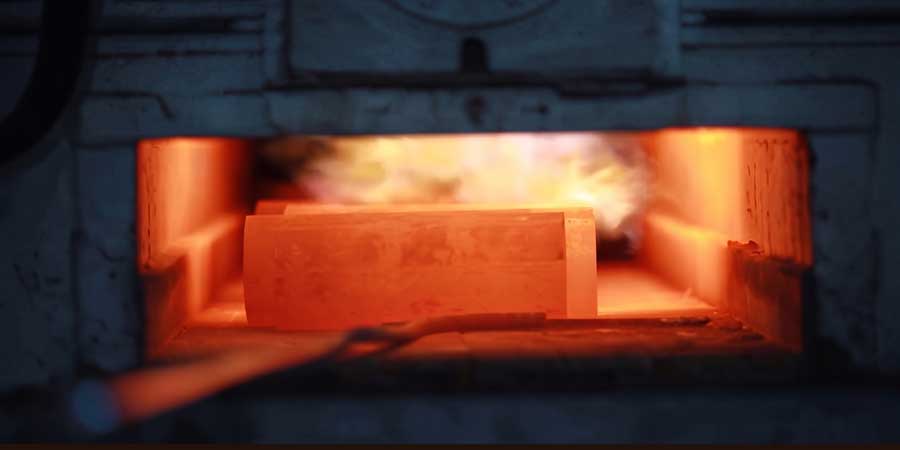
For this foundry and metal casting duty, selection depends on material or gas behaviour, the feeder or pickup, pipework, separation, filtration, controls and the operating cycle. The process designer defines capacity and product requirements, while the blower supplier confirms performance against the specified operating limits.
Application and Process Requirements
Roots technology may be considered for cupola-furnace combustion air, pneumatic conveying of new foundry sand, reclaimed-sand transfer, core-sand conveying, bentonite and coal-dust transfer, resin and powdered-additive handling, thermal sand-reclamation fluidization air, v-process vacuum moulding, lost-foam casting vacuum, vacuum-assisted casting systems, baghouse-dust conveying, shot-blasting dust transfer, ash-silo aeration, central industrial vacuum cleaning and wastewater-treatment aeration. These applications require different machine configurations. A clean-air cupola blower is not automatically suitable for vacuum casting gas or abrasive dust. The equipment boundary should include the components that directly affect the process, even when they are supplied by different contractors. A feeder, air-distribution header, separator, filter and receiving vessel each influence the pressure seen by the blower. The process designer should record how these components interact during routine operation and foreseeable transitions. That information gives the blower supplier a defined duty point and gives the plant team a practical basis for commissioning and fault diagnosis. A cupola furnace melts iron using a vertical charge containing metal, coke and flux. Air is introduced through tuyeres near the lower furnace section to support coke combustion. Combustion-air performance affects melting rate, coke consumption, metal temperature, furnace pressure, chemical reactions, carbon pickup and slag formation. The air system must provide both the required flow and enough pressure to overcome resistance through the furnace charge. The system should be reviewed as a coordinated package, including the machine, drive, inlet, discharge, silencers, instruments and process connections. Small restrictions or leaks can alter performance even when the blower itself is operating normally. Document the expected pressure, flow, temperature and cycle conditions, then compare measured values after installation. This creates a useful baseline for future adjustments and maintenance. The engineering record should state the blower duty point, differential pressure and discharge temperature on one consistent reference basis.
Large quantities of sand move between storage silos, sand coolers, mixers, moulding lines, core-making machines, shakeout systems, reclamation plants and return-sand bins. Pneumatic conveying reduces mechanical handling equipment but can create wear and sand-grain degradation if velocity is excessive. The roots blower supplies conveying air. Sand should not pass through the machine. A material assessment should connect physical properties to the components that handle it. Fines can raise filter loading, moisture can promote adhesion, and hard or sharp particles can accelerate wear at bends and valves. Fragile granules may lose their specified size distribution if velocity or impact is too high. The engineer should confirm these risks against samples from the intended supply stream and specify inspection access where the material can accumulate or damage surfaces.
System Design and Blower Selection
V-process moulding uses vacuum and thin plastic film to hold dry, unbonded sand around a pattern. Vacuum is maintained during mould preparation, handling, pouring and part of the cooling period. The vacuum system must handle air leakage through film and seals, sand dust, heat, plastic-film vapor, changing numbers of connected flasks and rapid mould-cycle transitions. A roots vacuum blower can be considered where the required vacuum and airflow fall within its approved range. A vacuum package is only one part of the lifting or process circuit. The suction device, seal, pipe network, receiver, filter and exhaust arrangement determine whether the required vacuum reaches the point of use. Short pressure fluctuations can sometimes be moderated by a reservoir, but storage volume does not replace adequate pumping capacity. Designers should define the duty under expected leakage and identify how the system will respond to a failed filter, open branch or loss of power. Lost-foam casting uses an expendable foam pattern embedded in unbonded sand. Molten metal vaporizes the pattern as it fills the mould. Vacuum may be applied to stabilize the sand, support mould filling, remove air, extract foam-decomposition gas and reduce mould-wall movement. The extracted gas can contain hot organic vapor and fine dust. It requires separation and treatment before reaching a dry vacuum blower. The process boundary should follow the material or gas from its source to the point where it is separated, discharged or returned. This makes it possible to distinguish the blower’s role from the feeder, receiver, filter and process machine. Engineers should also describe normal production, start-up, shutdown and cleaning states, because the same line can impose different demands during each stage. Where several branches share one package, the specification needs to state which users can operate at the same time and what minimum stable output the process requires.
Used foundry sand may be processed for reuse through mechanical reclamation, pneumatic attrition, thermal reclamation, screening, cooling and dust removal. Roots blowers may provide fluidizing, cooling or conveying air in selected systems. In foundry and metal casting, material names alone are not enough to predict handling behaviour. Particle-size distribution, shape, bulk density, moisture, temperature, cohesiveness and fragility influence feeding, transport, separation and product quality. Representative samples should be tested when the material is variable or when an existing process is being scaled up. The design basis should cover the least favourable credible condition, such as a wetter batch, a finer fraction or a more compacted bed, while keeping the operating limits visible to production and maintenance staff.
Operation and Reliability
Foundry dust can contain silica, clay, carbon, metal oxides, shot-blasting residue, refractory material, binder residue and combustible metal particles. Collected dust requires enclosed transfer and appropriate occupational and explosion controls. The filter specification should identify the particle range, expected dust load, gas temperature, moisture exposure and cleaning cycle. Housing strength and seals matter just as much as media efficiency because leakage can send dust around the element. Include a method for safe dust discharge and inspection, and state how differential pressure will be alarmed. These details protect both the blower and the process from gradual performance loss or sudden material carryover. Record filter differential pressure with the filter condition and production rate. Roots blowers are not automatically suitable for every foundry air system. Large-volume, low-pressure ventilation may be better served by centrifugal fans. Deep process vacuum may require staged Roots boosters and backing pumps. High-pressure core blowing uses compressed-air systems rather than low-pressure roots blowers. The operating case should be checked across normal production and foreseeable changes in load. The selected arrangement must maintain the required process condition without relying on a relief valve or bypass as a continuous control device. Allow for resistance in pipes, fittings and connected equipment, and make sure operators can isolate sections for inspection. A stable reference point gives the plant a way to detect drift before it becomes a production interruption. The engineering record should state the blower duty point, differential pressure and discharge temperature on one consistent reference basis.
A complete enquiry should specify the exact foundry process, required airflow, pressure or vacuum, airflow reference conditions, sand or dust properties, gas temperature, moisture and condensate, operating cycle, number of simultaneous users, hazard classification and ambient conditions. Blower selection can then determine whether the application requires a pressure blower, vacuum package or specially protected process-gas configuration. The final review should link the process guarantee to the equipment boundary. State who is responsible for material capacity, filtration, pipeline performance, control logic and package protection. Provide the supplier with an accurate route drawing, operating hours, ambient conditions, gas composition where relevant and the required maintenance access. This avoids comparing quotations that use different reference conditions or omit important package losses. The engineering record should state the blower duty point, differential pressure and discharge temperature on one consistent reference basis.
Before commissioning, define a repeatable duty point that includes the actual process rate, package airflow, inlet and discharge pressure or vacuum, motor input and product result. Check the machine under more than one normal operating case, since production schedule, product mix and downstream resistance can shift demand. Repeat the same readings after a shutdown, maintenance intervention or process adjustment. If performance drifts, compare the full set with the baseline and review the complete air path before changing blower speed. This keeps equipment selection connected to process output rather than a single nameplate figure and makes later troubleshooting more decisive. Map each blower duty to the foundry operation it serves, such as furnace air, sand handling, dust collection or mould vacuum. Their flow profiles and consequences of interruption are different, so one package rating should not be assumed to cover every service point.
A useful specification connects the required process result to the limits of the selected machine and the supporting equipment. State normal and maximum demand, operating hours, ambient conditions, control range and the pressure or vacuum at the process boundary. Include the losses and limits of filters, separators, valves, piping, silencers and cooling arrangements, and identify who verifies each item. Ask for the operating point, absorbed power and discharge temperature at the expected worst case, not just the nominal point. The acceptance plan should record both machine measurements and the result observed by production, giving the plant and supplier a shared basis for handover. A foundry enquiry should identify which systems operate continuously and which run in batches, along with any shared header or standby arrangement. Separate duty data makes it easier to size each package and avoid transferring an unverified process guarantee from one application to another.
Glossary
Baghouse Dust: Fine, hazardous particulate matter (including silica and metal oxides) captured by industrial fabric-filter dust collectors in foundry environmental systems, requiring enclosed pneumatic transfer.
Cupola Furnace: A vertical cylindrical melting furnace used in foundries to melt iron, utilizing a charge of metal, coke, and flux with combustion air introduced through lower-section tuyeres.
Fluidization Air: Controlled, low-pressure air introduced into a granular material bed, silo, or cooler to reduce inter-particle friction, allowing solid sand particles to flow like a liquid.
Foam-Decomposition Gas: The hot organic vapors and volatile gases generated when molten metal rapidly vaporizes the expendable polystyrene pattern during the pouring stage of lost-foam casting.
Lost-Foam Casting: A precision metal-casting process using an expendable polymer foam pattern embedded in unbonded sand, which is directly vaporized and replaced by molten metal during pouring.
Mechanical Attrition: A sand reclamation technique that employs mechanical friction, impact, and scrubbing forces to strip away brittle, spent binder coatings from recycled foundry sand grains.
Thermal Sand Reclamation: An advanced sand-recycling process that uses high-temperature thermal treatment to burn off and remove residual organic chemical binders from used foundry sand.
Tuyeres: The specific nozzles or ports located near the lower section of a cupola furnace through which low-pressure combustion air is injected into the vertical charge.
Unbonded Sand: Dry, binder-free foundry sand used in vacuum-moulding and lost-foam processes, relying on negative pressure or vacuum containment rather than chemical agents to maintain structural form.
V-Process Moulding: A specialized casting method that utilizes vacuum pressure and a thin plastic film to hold dry, unbonded sand tightly around a pattern without requiring mechanical compaction.