

Roots blower applications for iron and steel industry span several distinct duties, from air supply and material transfer to vacuum-system support. Each application has its own gas, pressure, temperature and contamination conditions, so the machine type must be checked against the complete service. Iron and steel production combines raw-material handling, high-temperature melting, secondary metallurgy, gas processing, dust collection and environmental-control systems.
For detailed technical articles, click here.
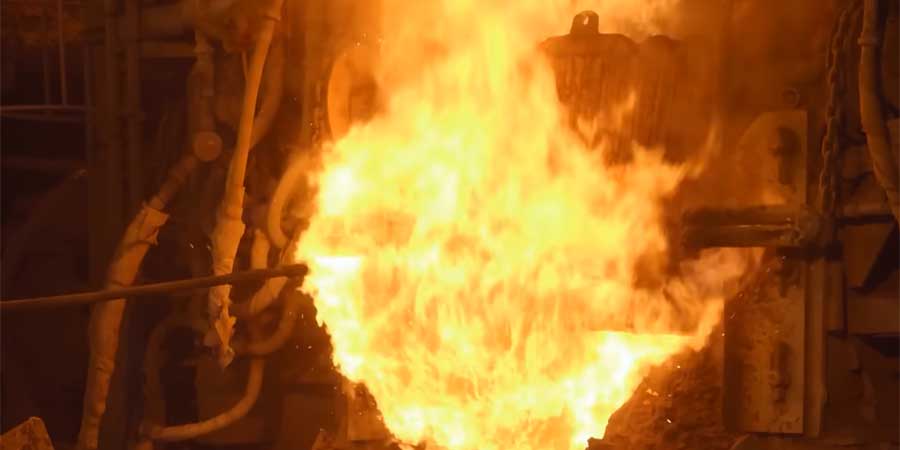
These operations require very different pressure, vacuum, airflow and gas-handling duties. Roots blowers and mechanical Roots vacuum boosters can serve selected applications when the machine is configured for the actual air or process gas. The term “roots blower” should not be applied indiscriminately to every air-moving machine in a steel plant. Main blast-furnace blowers, large sinter fans and high-pressure oxygen systems normally use other technologies.
Plant Air, vacuum and Process-Gas Duties
Roots blowers can serve selected mill duties such as sheet dewatering and transfer, externally aerated deinking flotation, wastewater aeration, dry additive conveying, and ash handling. Each application has its own airflow, pressure, and moisture-separation requirements. The machine configuration required for a clean-air conveying system differs fundamentally from a vacuum booster handling metallurgical process gas. Molten steel contains dissolved gases and unwanted elements that can affect final product quality. Applying vacuum reduces the partial pressure of dissolved gases and supports their removal from the liquid metal. Mechanical vacuum systems may use several stages of Roots-type boosters combined with suitable backing pumps. These systems must handle large gas-volume changes, rapid pump-down, carbon monoxide, carbon dioxide, hydrogen, nitrogen, argon, metal and oxide dust, hot process gas, and water vapor. A standard atmospheric-air roots blower is not automatically suitable for this service. Steel plants consume large quantities of powdered and granular materials, including lime, dolomitic lime, carbon, bentonite, pulverized coal, ferroalloys, desulfurization agents, slag-forming additives, refractory materials, and filter dust. Roots blowers can provide the air required to transfer suitable materials through enclosed pipelines. The blower normally remains upstream of the material feeder in a positive-pressure system or downstream of filters in a vacuum system. Powder should not pass through the blower.
Steel plants use air-moving equipment for many different tasks, but the process boundaries are important. Roots blower applications may include low-pressure plant air, aeration, pneumatic transfer, dust collection support or auxiliary process duties, depending on the selected model and package. Vacuum treatment, fuel-gas boosting and hot or contaminated service require separate engineering review. The equipment specification should identify the process stream, required pressure or vacuum, gas composition, temperature, solids exposure, operating cycle and available utilities. A generic application list cannot establish suitability for a particular plant. The process owner should define the performance result and the blower supplier should verify machine data for the stated operating point. This separation prevents the machine’s general capability from being interpreted as a guarantee for a specialized metallurgical process.
Steel-plant environments add heat, dust, vibration, weather exposure and restricted access. Package placement should consider crane routes, maintenance clearance, intake location, hot surfaces, exhaust direction and the effect of nearby equipment. A machine room can accumulate heat or dust if ventilation is inadequate. Flexible connectors and pipe supports should prevent external loads from reaching blower ports. Electrical and instrumentation choices must match the site conditions and classified areas identified by the plant. If the process stream is combustible, toxic or oxygen-enriched, include a hazard review before selecting a standard package. Protective trips and relief devices need settings based on verified machine limits and system design. These features should be included in the RFQ and acceptance plan rather than added after the package is built.
The engineering basis for the boundary between standard air service and specialized steel-process duties should connect the process state to the real equipment duty. Record gas composition, solids, temperature, pressure or vacuum, and process sequence, together with the normal production rate, start-up and shutdown conditions, and any expected variation. This helps the project team distinguish a stable operating point from a transient case that needs a separate check. Include losses through the complete process path and note components that can foul, leak, or change position in service. During acceptance, record flow at stated reference conditions, pressure or vacuum at agreed points, temperature, speed, and motor load; also identify the material, process state, and filter condition used for the test. Keep these readings as the baseline for later comparisons. The equipment supplier can verify the machine against its documented limits, while system performance and the application result should be assigned to the responsible process or system designer. A design review should also record the boundary condition that can invalidate the assumed duty: a general application list does not establish a model-specific suitability.
Conveying, Dust and Injection Systems
Direct injection into a furnace should be distinguished from transfer between storage and day bins. Direct EAF or ladle injection may require pressure, solids control and safety features beyond the range of a standard low-pressure blower. A roots blower may be suitable only when Required injection pressure is within its approved range. The process supplier confirms the carrier-gas requirement. Material feeding is stable. Backpressure variation is understood. Furnace reverse-flow protection is provided. Low-pressure transport to an intermediate hopper is often a different and less demanding duty. Electric-arc furnaces, basic-oxygen furnaces, ladle-treatment stations and material-transfer points generate fine dust. After collection in a baghouse or another separator, dust can be transported pneumatically to storage silos, stabilization systems, recycling plants, briquetting units, and controlled disposal containers. Dust characteristics vary widely. Some steelmaking dust contains metal oxides, carbon, zinc, lime and hazardous trace elements. Integrated steelworks may produce and use coke-oven gas, blast-furnace gas, converter gas, and mixed fuel gas. These gases can be combustible, toxic and oxygen deficient. They may also contain dust, tar, condensate and corrosive compounds. Only a gas-tight roots blower specifically engineered for the gas composition, pressure and hazardous area may be considered. A standard air blower must not be connected to these gas networks.
Material handling in steelworks can involve lime, carbon, flux, pellets, mill scale and collected dust. These solids differ in abrasiveness, moisture response, particle shape and temperature. Feeder type, pipe route and receiving vessel need to be selected for the actual material. A leak at a feeder or filter can release dust, while insufficient velocity or an unsuitable line can allow deposits to build up. The conveying duty should include the route length, elevation, bends, solids rate and filter resistance. If a line feeds a furnace or injection lance, confirm the process interface and control sequence with the furnace designer. The roots blower supplies the carrier gas within its verified pressure range; it does not prove that a material will convey at the desired rate without testing or system calculation.
Selection should proceed duty by duty. State whether the requirement is air, vacuum, process gas or solids transport, then provide flow, pressure, temperature, composition, contamination, cycle, site elevation and power supply. Identify required accessories and who integrates controls with the plant. Ask for performance curves and operating limits for the selected model and configuration. Where a specialized vacuum booster or gas-tight machine is required, request separate written confirmation of the exact service. Commissioning should record machine readings and the process state at the same time. This documentation makes it possible to distinguish a blower issue from a filter, pipe, feeder or process change. It also gives procurement a consistent basis for comparing technically equivalent proposals without relying on broad application claims.
Environment, Selection and Application Limits
Roots blowers may supply low-pressure air to selected burners or small combustion systems requiring stable airflow. They do not normally replace the main turbo blowers or large centrifugal fans serving blast furnaces, large reheating furnaces, sinter strands, pelletizing plants, and coke-oven combustion systems. The required volume and pressure must be checked before selecting positive-displacement technology. Blower packages may be exposed to high ambient temperature, dust, scale, vibration, water spray, outdoor weather, corrosive gas, radiant heat, limited maintenance access, and continuous production requirements. Motors, instruments, silencers and acoustic enclosures must be selected for the actual installation area. The enquiry should specify exact process duty, air or gas composition, airflow reference conditions, inlet pressure, discharge pressure, required vacuum, gas temperature, dust and liquid carryover, operating cycle, site altitude, ambient temperature, hazardous-area classification, and required materials and seals. Roots blower selection can then determine whether a standard clean-air package, vacuum configuration or specially engineered gas-handling unit is technically suitable.
Vacuum systems around steelmaking may operate on hot off-gas containing dust, moisture or process constituents. A roots-type mechanical booster may be part of a dedicated vacuum train, but it is not automatically interchangeable with a standard positive-pressure blower. The booster must be matched with backing equipment, dust separation, cooling, valves and the pump-down profile. Gas composition and transient loads can affect materials and operating limits. Any proposed vacuum service should be reviewed against the exact machine configuration and supported by written model data. The vacuum-system designer is responsible for the complete train and process performance. A supplier can confirm only the scope and limits of equipment it has verified. This boundary is especially important when the duty involves molten-metal treatment or other severe process conditions.
Glossary
Backing Pump: A primary vacuum pump that discharges directly to atmospheric pressure, operating in tandem with a roots vacuum booster to quickly evacuate a metallurgical vessel.
Baghouse: A large-scale industrial filtration system that utilizes fabric filter bags to capture fine dust, metal oxides, and hazardous trace elements from the furnace exhaust.
Carrier Gas: The pressurized medium (such as air, nitrogen, or argon) supplied by the roots blower to propel powdered materials through a pipeline safely.
Day Bin / Intermediate Hopper: A temporary storage silo situated close to the active furnace, which receives pneumatically conveyed materials before they are directly injected into the melting process.
Electric-Arc Furnace (EAF) & Basic-Oxygen Furnace (BOF): Primary steelmaking vessels where raw materials or scrap are melted at extreme temperatures, generating heavy, hazardous metal and oxide dust.
Gas-Tight: A strict mechanical sealing standard for blowers handling toxic, combustible, or oxygen-deficient process gases (like coke-oven or blast-furnace gas) to prevent hazardous leakage into the plant environment.
Injection Lance: A specialized pipe or nozzle used to shoot powdered additives or carrier gases directly into the molten steel bath under high pressure.
Mechanical Vacuum Booster: A specialized roots-type machine used to handle large volumes of process gas, working in series with primary backing pumps to achieve the deep vacuum levels required for steel degassing.
Pneumatic Conveying: The engineered process of transporting bulk granular or powdered additives (e.g., lime, pulverized coal, filter dust) through enclosed pipelines using a pressurized carrier gas.
Pump-Down: The rapid operational phase of extracting air and process gases from a closed vessel or furnace to reach the target operating vacuum level.
Secondary Metallurgy / Ladle Treatment: Advanced refining processes performed on molten steel after the primary melting stage to adjust its chemical composition and remove unwanted dissolved gases under a deep vacuum.