

Roots blower applications in plastics processing span material handling, plant air and selected vacuum processes, but each duty has a different system boundary. Resin form, process temperature, dust loading and required pressure or vacuum determine whether a standard air package is relevant or specialist equipment is needed.
For detailed technical articles, click here.
Plastic production and recycling require reliable movement of pellets, powders, flakes, additives and process gases. Roots blowers can provide positive-pressure or vacuum airflow for material transfer, while specially configured roots vacuum boosters can support polymer degassing and devolatilization. These applications should be separated from thermoforming vacuum, which is covered as a different use of roots technology.
Where Blowers Fit in Plastics Plants
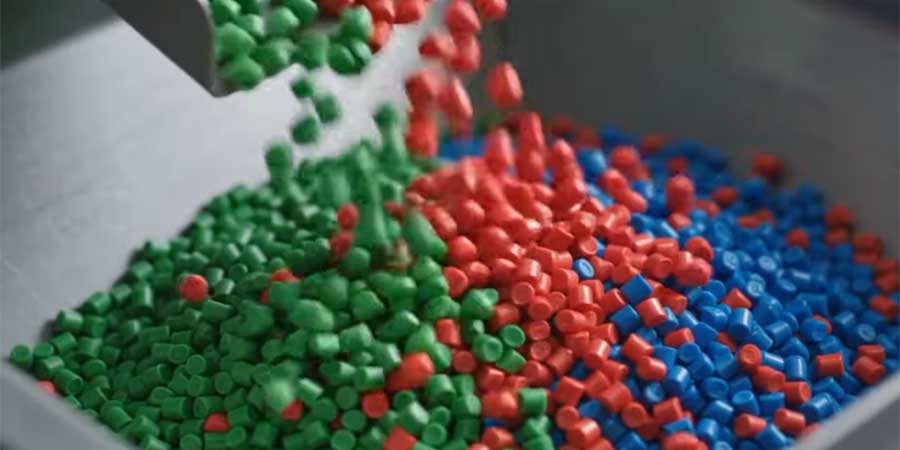
Roots blowers may be considered for plastic-pellet pneumatic conveying, central vacuum material loading, and resin unloading from bulk tankers. The suitability of roots technology depends on airflow, pressure, vacuum, material behaviour, process-gas composition and operating cycle. Pellets are commonly transported from storage silos or material-reception stations to dryers, day bins, and blenders. Although pellets appear robust, excessive conveying velocity can generate fines, streamers and filament-like material known as angel hair. The objective is stable transport at the lowest practical velocity, not maximum blower airflow. Post-industrial and post-consumer recycled materials can differ substantially from uniform virgin pellets. Recycled material may contain irregular particles, flakes, and dust. These differences affect pickup, pipeline pressure loss, receiver separation and filtration. Compounding plants may handle PVC powder, polyethylene powder, and polypropylene powder. Fine powders can create dust-explosion, contamination and filter-loading concerns. Each material requires an individual conveying assessment.
The first selection decision is whether the process needs pressure, vacuum or recirculated gas. Positive-pressure conveying can serve a transfer route from a feeder to a receiver, while vacuum loading can draw resin from several sources toward a filter receiver. Plant air and extruder degassing have different inlet conditions and downstream interfaces. A general application label therefore gives procurement too little information. Describe the material source, destination, transfer mode, batch or continuous cycle, expected simultaneous users and result required at the process machine. That scope lets the project team identify the correct equipment class before comparing machine curves. Specialized vacuum or gas duties need a separate written scope. Extruder degassing may expose the vacuum train to vapor, entrained polymer, additives and changing gas load; a standard positive-pressure air blower description does not prove booster suitability. Nitrogen loops need containment and heat management, while dust-generating processes need filtration and a defined cleaning method. State the gas, pressure range, temperature, carryover risk, seal requirement and backup equipment. The supplier should confirm the exact model configuration and permitted operating limits in writing before quotation; the process designer remains responsible for the complete system and product result.
A design review for resin handling across several production processes should cover the complete path between the process and the blower. Use material identity, transfer route, receiver sequence, filter condition and production cycle to define the operating case, then include losses across filters, valves, pipework, separators, feeders and coolers. Check normal operation as well as the expected service condition, since resistance and demand can change over time. A loaded filter, a closed branch or a changed feed rate can shift the duty even when the blower speed stays fixed. Define the control response to relevant abnormal conditions and keep those actions within verified machine limits. In this case, one application label cannot confirm suitability for all plastics duties. Recording assumptions before order placement gives engineering and maintenance a reference if the route, material, gas or production schedule later changes, and helps identify which interface should be inspected first. Component-level readings can show whether the pressure loss is concentrated at a filter, valve or process connection. That evidence may support a system correction before anyone considers changing the machine selection.
Material and System Design
Plastic melts can contain moisture, trapped air, and residual monomer. Vacuum applied at an extruder vent lowers gas pressure above the melt and supports removal of these volatile components. Roots vacuum boosters can be incorporated into a staged vacuum system where high pumping speed or deeper vacuum is required. Correct blower and vacuum performance can help reduce bubbles, voids, and surface streaks. The blower cannot correct unsuitable polymer formulation, inadequate washing, ineffective melt filtration or incorrect extruder design. In a positive-pressure system, the roots blower is installed before the material feeder. It handles clean conveying air. In a vacuum system, the blower is installed after the receiving filter. The material is separated before air reaches the blower. Combined systems may use vacuum for plant distribution and positive pressure for longer bulk transfer. Conveying air can contact the resin directly. It should be free from oil aerosol, rust, and condensate. Roots blowers do not inject lubricant into the compression chamber, but the complete air path must still be kept clean.
Virgin pellets, regrind, flakes, powders, pigments and mineral additives should not be treated as interchangeable solids. Particle shape, size distribution, bulk density, moisture, temperature, friability and dust generation affect feeder behavior, pickup and filter loading. Recycled feed may change from batch to batch, while fine additives can segregate or contaminate a product if the line is not cleaned effectively. Collect representative samples and state any product-quality limit that matters. Where a material is cohesive, abrasive or easily damaged, a material test or operating reference from a comparable line may be needed before capacity is guaranteed. A plastics plant may use several blower technologies in the same production area, so the article topic should be mapped to a precise process connection. A pellet-loading circuit, powder dosing line and extruder vacuum train do not share one assumed pressure range or filtration design. The engineering team should define the duty at the equipment interfaces and show where material ends and clean gas begins. This boundary helps operations understand which filter, receiver or seal requires attention. It also prevents a general application statement from being used as evidence that a selected model fits every resin or process.
An enquiry covering specialized vacuum or inert-gas service should make the duty and guarantee boundary explicit. State gas composition, vent load, pressure, temperature and carryover protection, the operating range, site conditions, package accessories and acceptance method. For process gas, provide composition and contamination data; for solids, describe the material and route. Include clean and expected service resistance where filters or separators can load during operation. Ask the supplier to confirm the exact model and configuration against that information. The quotation should distinguish machine data from system guarantees such as throughput, recovery rate or product quality. This matters because general air service data do not establish process-vacuum or gas-tight suitability. A written design basis lets procurement compare proposals using the same conditions, exposes missing process inputs before order placement and prevents an unverified application label from being treated as a performance commitment. Add the required control range, standby philosophy and utility conditions so the package boundary is clear. If the process requires a gas seal, special filtration or a closed drain, state how the feature will be documented and accepted.
Selection and Process Boundaries
Air may be unsuitable where the polymer or additive is oxidation sensitive, moisture sensitive, and combustible as a fine powder. Nitrogen or another approved gas may be used in a specially engineered conveying system. The blower must be gas tight and compatible with the selected gas. Closed-loop systems require cooling, filtration and oxygen control. Roots blowers are not automatically the preferred equipment for every plastics application. Small local loaders may use compact vacuum technologies. Very-large-volume, low-pressure trim systems may use fans. Deep extruder vacuum may require roots boosters combined with backing pumps. A standard roots blower should not be presented as a complete solution for all these duties. A complete enquiry should specify material, particle size and shape, and bulk density. Roots blower selection can then be based on the actual resin, pipeline, vacuum system and operating environment. The equipment boundary includes feeder, pipework, receiver, filter, valves, silencer, cooling and controls. Leakage at a feeder consumes air that would otherwise be available to carry material; a loaded receiver filter adds resistance and can alter the system point. Central systems also need a sequence that prevents two receivers from drawing through an unintended path. For vacuum service, include separator pressure drop and a downstream protective filter appropriate to the blower arrangement. Every component should be selected for the actual material and operating cycle, and the clean-filter and service-filter cases should both appear in the pressure calculation.
When readings change, compare the operating data associated with conveying capacity boundary against the original baseline. Review feeder leakage, line loss, receiver resistance and solids rate together with filter loading, valve position and process demand. If pressure rises while flow falls, investigate resistance or increased load; if both pressure and motor load fall, check speed, leakage or feed conditions. Confirm the process state before drawing a conclusion, since a grade change, gas-composition shift or different transfer route can move the operating point. Apply only the diagnostic pattern that fits the measurements, and keep protective trips active. The review should account for the fact that blower airflow alone does not guarantee material throughput. Recording the cause and corrective action gives later shifts a practical reference and helps show whether the same issue is recurring or whether a new process condition is responsible. Check instrument calibration and compare readings at the blower with those near the process connection before dismantling the machine. A change that appears at only one point usually directs attention to an intervening component or branch. Restart only after the initiating condition has been understood and the approved protection is available.
Glossary
Angel Hair / Streamers: Fine, elongated, filament-like strands of plastic that form in conveying lines when delicate virgin pellets are transported at excessively high velocities and melt slightly against the pipe walls due to friction.
Compounding: The complex process of blending raw plastic polymers with specific additives, colorants, or minerals (often in powder form, like PVC or polyethylene powder) to achieve desired physical or chemical properties before extrusion.
Day Bin: An intermediate storage silo located inside the production facility, designed to hold a sufficient quantity of plastic resin for immediate daily processing, supplied by long-distance positive-pressure conveying.
Extruder Degassing (Devolatilization): A critical process where a mechanical vacuum system (often incorporating roots boosters) is applied to an extruder vent to forcefully extract trapped air, moisture, and residual monomers directly from the hot polymer melt.
Filter Receiver / Central Vacuum Material Loading: A vacuum-based receiving vessel positioned above a processing machine (like an injection molder or extruder) that separates the pneumatically conveyed plastic pellets from the air stream before feeding them into the machine.
Friability: The tendency of certain plastic additives or brittle resins to break down, crumble, or turn into fine dust upon mechanical impact during pneumatic transfer, increasing the load on the receiving filters.
Nitrogen Loop (Closed-Loop System): A specially engineered, gas-tight conveying circuit that uses recirculated nitrogen gas instead of atmospheric air to transport moisture-sensitive, oxidation-prone, or highly combustible plastic powders.
Pneumatic Conveying / Material Handling: The engineered process of transporting solid plastic raw materials (such as pellets, powders, or flakes) through a pipeline network using pressurized air or vacuum supplied by roots blowers.
Regrind / Flakes: Irregular, non-uniform particles created by mechanically grinding post-industrial or post-consumer plastic scrap, which behave differently in pipelines than uniform pellets and can accelerate wear or filter loading.
Virgin Pellets: High-quality, uniform, and newly manufactured plastic resin beads that have not been previously processed, requiring careful pneumatic handling to prevent degradation or contamination.