

Roots blower pneumatic conveying uses a positive-displacement air source to push a dry bulk solid through a pipeline. Material enters downstream of the blower through a controlled feeder, travels with the carrier air and is separated at a receiver. The machine is important, but stable transport depends on the complete feeder-to-filter system.
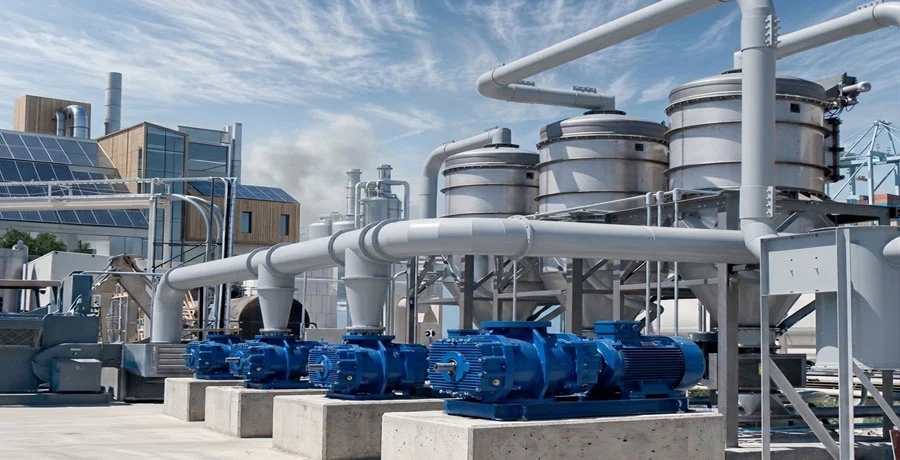
Pasifik Blower is positioned here only for compatible positive-pressure duties. A vacuum conveying line uses a different air-source arrangement, and no roots vacuum booster is offered or implied. This boundary lets the project concentrate on the flow and pressure envelope that the available two-lobe and three-lobe machines can actually serve.
Roots blower Pneumatic Conveying: Map the Complete Air Path
A typical system includes an intake filter, blower package, optional cooler, feed device, conveying pipe, bends, supports, receiving vessel, gas-solid separator and vent filter. Instruments monitor pressure, temperature, filter loading and blockage-related conditions. Each component adds resistance or leakage that influences the required air duty.
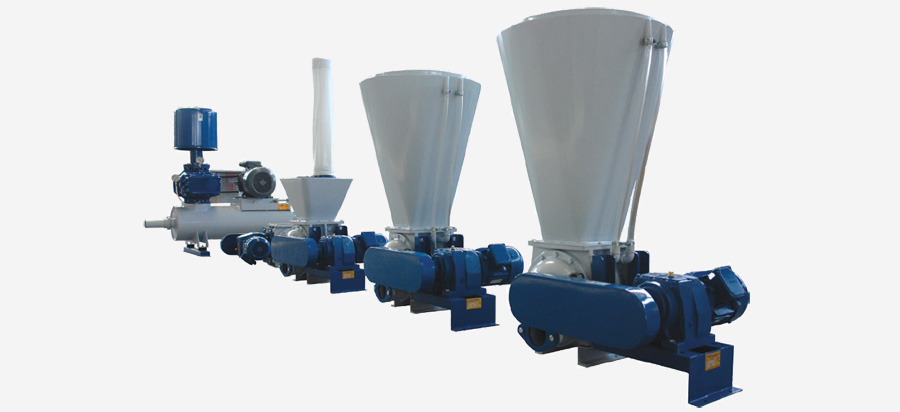
The conveyed product should not pass through the blower. It is introduced after the discharge by a rotary airlock, screw, blow tank or another engineered feeder. The selected feed method must control solids rate while limiting unwanted air escape across the pressure boundary.
Understand What Positive Displacement Contributes
A roots blower transfers a defined displaced volume on each revolution. Delivered volume is comparatively stable at a given speed, although internal slip, inlet density and differential pressure still affect actual performance. In roots blower pneumatic conveying, the connected line creates the pressure that the machine must overcome.
The compression chamber is not intentionally oil-injected; the gearcase and bearing assemblies use separate lubrication outside the gas path. This arrangement supports clean-air service but does not certify food-grade or sterile air. Intake quality, seals, cooling, piping and maintenance determine the complete delivered-air condition.
Qualify the Material and Route Before Sizing
Particle-size distribution, bulk density, moisture, cohesion, permeability, abrasiveness, friability and temperature all influence conveyability. Two materials with the same trade name can behave differently if fines or moisture change. Testing is prudent for fragile, cohesive, aeratable or highly variable products.
Route geometry is equally decisive. Horizontal length, vertical lift, pipe diameter, bend count and radius, receiving pressure and filter resistance shape the pressure profile. Too little velocity can lead to deposition; unnecessary velocity can increase wear, degradation, noise and filter load.
- Minimum, normal and peak solids throughput with batch or continuous timing
- Representative particle, bulk-density, moisture, wear and friability data
- Complete route drawing with diameter, lengths, lifts, bends and receiving pressure
- Feeder type, leakage estimate and material-entry operating sequence
- Receiver and vent-filter loss at clean and loaded conditions
- Air reference condition, site altitude, inlet temperature and future cases
Coordinate Feeding, Separation and Controls
A rotary valve sized only by pocket volume may leak enough air to reduce transport capacity. Clearances, product temperature, pressure difference, wear and filling efficiency belong in the feeder review. At the receiving end, the separator and vent filter must pass the full local gas volume without losing excessive product.
Loaded filter media raises system pressure and can move the roots blower pneumatic conveying duty toward a power or temperature limit. Differential-pressure trends, high-pressure shutdown and a correctly sized relief valve help protect equipment. They do not replace a validated blockage and restart procedure.
Treat Dust Safety and Product Quality as System Requirements
Combustible dust can exist inside conveying equipment even when the surrounding room looks clean. The owner must complete the required hazard assessment and define bonding, grounding, isolation, detection, venting or suppression under the governing rules. A blower relief valve is pressure protection, not explosion protection.
Sensitive products may require certified materials, cleanability, temperature control and validated filtration. Pasifik Blower can evaluate roots blower pneumatic conveying after the conveying specialist provides the calculated air duty. The proposal should state the included package and exclusions rather than imply system-level guarantees.
Glossary
Carrier air: Gas stream that supplies drag and transports solids through a pneumatic conveying line.
Feed device: Equipment that meters bulk material into a conveying line while controlling gas leakage.
Gas-solid separator: Receiver component that separates conveyed particles from the carrier gas.
Positive-pressure conveying: Pneumatic transport in which an upstream air source pushes material through a line above atmospheric pressure.
Receiver: Vessel accepting conveyed material and providing space for gas-solid separation.
Rotary airlock: Pocketed rotary feeder used to transfer solids across a pressure boundary while limiting gas flow.
Solids throughput: Mass of bulk material conveyed per unit time under a stated operating case.
System pressure profile: Distribution of gas pressure through the feeder, pipe, bends, receiver and filter.
Vent filter: Filter that retains product or dust while allowing conveying gas to leave a receiver.
Volume displacement: Geometric gas volume transferred by a positive-displacement machine per revolution before slip corrections.